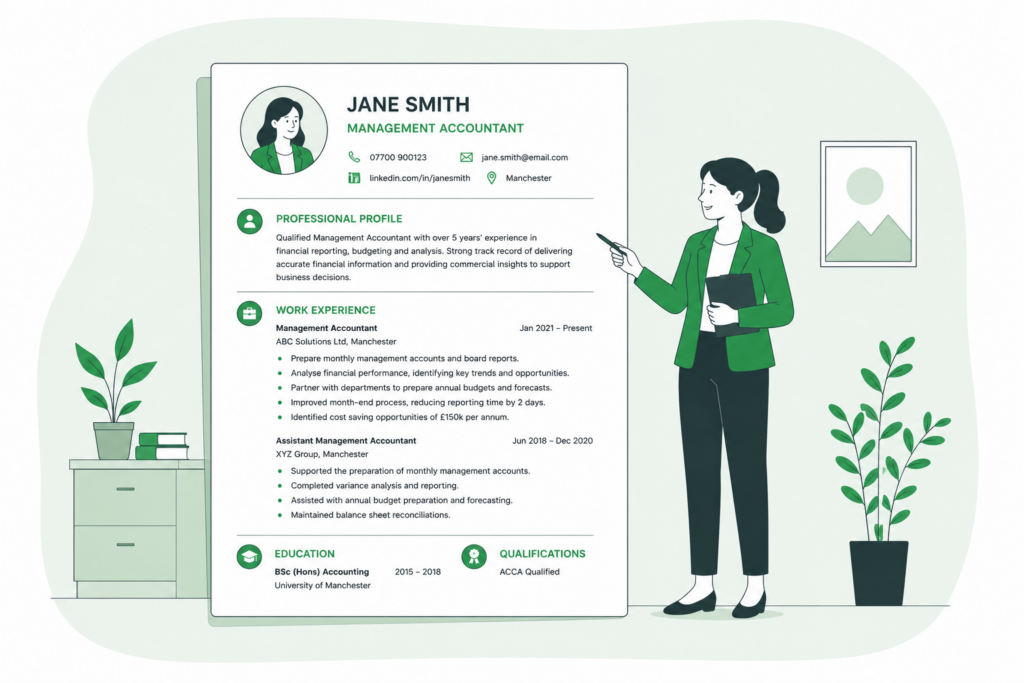
CV Top Tips!
1.Start with a strong personal profile
Open with a short summary that highlights your experience, qualifications, and career goals.
2. Focus on achievements not just responsibilities
Rather than “Prepared month management accounts” – Try “Reduced the month-end close process from 8 days to 5 by improving reporting procedures and identified cost saving opportunities that delivered annual saying of £150,000.”
3. Include you key skills
Create a dedicated skills section to help employers quickly identify your strengths and experience without looking through every job’s responsibilities.
4. Check for spelling and grammar
Simple mistakes can create a poor first impression. Proofread your CV and ask a friend or family member to read over it for a fresh set of eyes.
5. Keep it up to date
Before submitting your CV, ensure all roles and timelines are up to date. If your current role isn’t yet on your CV, it can look like you haven’t worked for that period of time – leading to questions and potentially putting off employers despite that not being true.
6. Put your most recent experience first
Ensure your most recent role is at the very top of your work experience. Employers look through hundreds of CVs for a role and want to see where you’re at now rather than where you were at the beginning of your career. Grab their attention straight away.
7. Don’t leave employment gaps unexplained
If you’ve taken time out for travel, parental leave or studying, simply explain it. A short explanation is far better than leaving employers guessing.
8. List the systems you have used
Many employers are searching for candidates that have used specific systems as this can make the settling in period much smoother. Having that system on you CV could be what secures you an interview.
9. Put all contact details at the top of your CV
Phone number, email address and location should all be under your name at the top of your CV. This ensures the employer can contact you in multiple ways and quickly through a phone call, text or email as the last resort. Having your location is also extremely important as, for most roles, it is definitely more attractive if the candidate lives close by the role.
10. A covering letter can to support your CV can go a long way!
A covering letter, written for a specific role and company, can be extremely useful in getting across your personality, commitment, enthusiasm and intuition. Researching the company, getting some key facts into your covering letter, and showing the value you would bring, shows that you have gone the extra mile.
How does your CV match up with our top tips? If you need any further guidance, please get in touch with a member of our team at 0161 711 0577 who will be more than happy to assist.