The Big Debate: Remote, Hybrid or Office Based Finance Roles
The way we work has changed dramatically over the last few years; while some businesses have embraced remote working, others have returned to the office, with many settling in the middle on a hybrid model.
Whether you’re a candidate looking for your next opportunity or an employer debating which working model will suit your business and staff the most, here are a few things to consider.
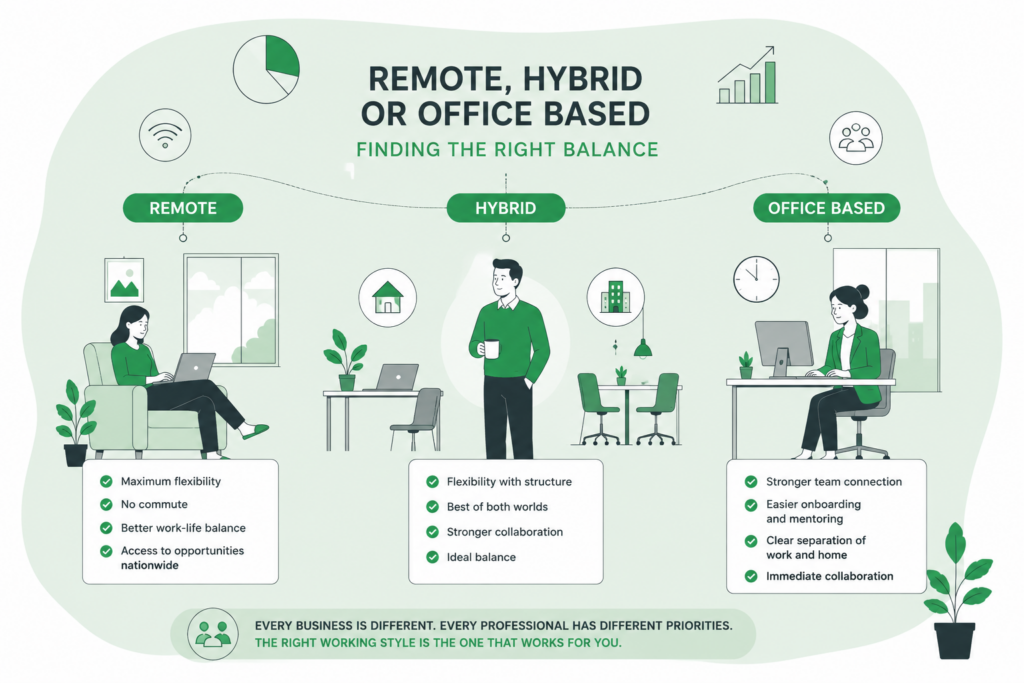
Fully remote workforces became ‘the norm’ in 2020 when the whole world was locked down. The benefits that came along with this included better work-life balance, no commuting cost or travel time, greater flexibility, and access to opportunities worldwide.
As restrictions have become a thing of the past, employers are now keen to return back to the traditional full-time, in-office working environment with the intention of boosting collaboration and dismiss any concerns regarding productivity. Is this the right move for everyone or should we be more open to growth and change?
The Shift in Candidate Expectations:
While many finance professionals enjoyed the flexibility that remote working offers, we’re now seeing a growing divide between what candidates want and what some employers are asking for.
For many candidates, hybrid working has become an expectation rather than a benefit. Alongside salary and career progression, flexibility is now one of the first topics discussed during the recruitment process. It’s common for candidates to ask about office attendance before deciding whether to move forward with an opportunity.
At the same time, some employers have introduced stricter return-to-office policies, believing that increased office presence leads to better collaboration, faster onboarding and stronger company culture.
But What Does the Data Say?
Interestingly, research suggests that remote working doesn’t necessarily reduce productivity. Recent UK studies found that 52% of employers believe productivity remains the same regardless of where employees work, while 19% believe employees are actually more productive when working remotely. Only 13% felt productivity was lower.
For many finance roles—where success is measured by accuracy, deadlines and commercial outcomes rather than physical presence—this isn’t surprising.
Why Hybrid Is Winning
From our experience recruiting across the finance sector, hybrid working has become the sweet spot.
It gives employees the flexibility they’re looking for while allowing businesses to maintain face-to-face collaboration, support junior staff and strengthen team culture.
We’re seeing the majority of finance vacancies now offer some form of hybrid working, typically requiring employees in the office two or three days per week. Fully remote opportunities still exist but are becoming less common, while fully office-based roles remain prevalent in sectors where collaboration, leadership or operational requirements make office attendance more important.
For employers, offering hybrid working can also widen the talent pool and make roles more attractive in a competitive market. For candidates, it strikes a balance between flexibility, career development and staying connected to colleagues.